
Collection
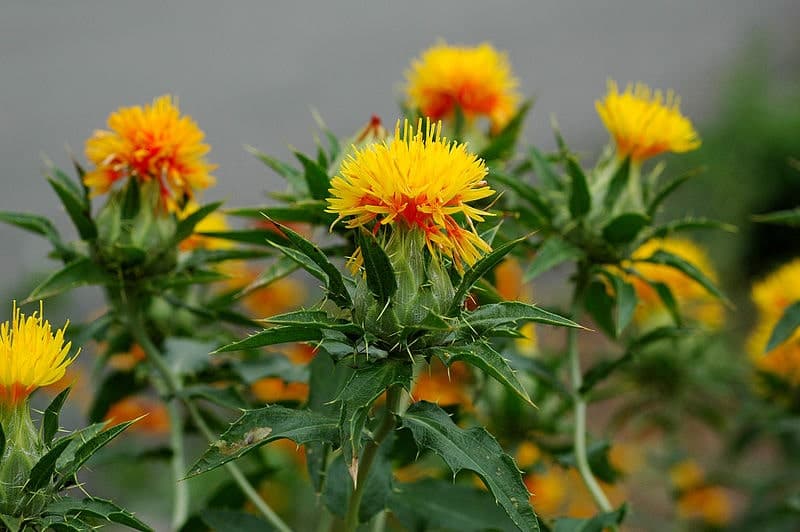
Safflower, India

Product code: Not provided
No sizes are currently available.
About this product
This first cold pressed virgin safflower oil from Mexico is particularly effective to treat couperose skin. Non comedogenic. Very sensitive to oxidation. For further information about this product or to inquire about larger quantities, please send us an email and we will get back to you as soon as possible. The availability of this product may vary, if for some reason the quantity you have requested is currently unavailable, we will contact you shortly to discuss the best options to fulfill your needs.
Identity and quality
- Botanical name
- Carthamus tinctorius
- Origin
- India
- Plant part
- Seeds
- Extraction
- Cold pressed
- Cultivation
- S-BIO
- Synonyms
- Carthamus glaber, Carthamus inermis
- INCI
- Carthamus tinctorius (safflower) seed oil
- CAS TSCA
- 8001-23-8
- Appearance
- Pale yellow to yellow liquid
Composition and further information
It is also called Safflower of the dyers, saffron of the dyers, false saffron or bastard saffron (it is not a saffron which comes from a variety of crocus). It is a bee plant. Safflower, a member of the Asteraceae family, is one of the oldest cultivated plants. The first trace would be about 4500 years ago in Mesopotamia. The brightly colored petals have been used in textile dyeing since at least the Twelfth Dynasty in Egypt where the plant was held in such high esteem that garlands of safflower flowers have been found in the tomb of Tutankhamun. Most of us know safflower more humbly, for the oil pressed from its seed. An oil that provides an abundance of beneficial nutrients for our body inside and out.
A word from Anny Schneider
Combined with good essential oils, it can treat redness on the face as well as cellulite. The ripe seeds of this pretty Asteraceae with soft yellow petals is known for its lipotropic effects, drains and dissolves fats , both circulating and on the surface. It is a great ally for rosacea and very sensitive skin. It is non-comedogenic and also helps to treat acne and excessively oily skin.
Properties — source text
Safflower, a member of the Asteraceae family is believed to be one of the longest cultivated plants, the first evidence of which is traced to 2500 BC in Mesopotamia. The brightly coloured petals have been in use in textile dying since at very least the XII dynasty in Egypt where the plant was held in such high esteem that garlands of Safflower blooms were found in the tomb of Tutankhamon. Most of us know Safflower more humbly, for the oil pressed from its seed. An oil that provides an abundance of nutritive elements beneficial to our bodies inside and out.
Documents and certifications
Warnings and storage
Read the product-specific precautions, safety data sheet and usage guidance before use.
- Keep out of reach of children. Do not ingest; seek urgent medical or poison-control advice after accidental ingestion.
- Avoid eyes and mucous membranes. For essential oils, follow dilution guidance and patch-test before use.
- Ask a health professional before using essential oils during pregnancy or breastfeeding, or with epilepsy or asthma.
- Stop use if an adverse reaction occurs. Follow the product-specific restrictions on sun exposure.
- Store in a closed container away from light and heat. This information does not replace medical advice.
Comments
No comments have been published yet.
Write a comment
Our team reviews comments before publication. Your public name and text will be visible. Sign in