
Collection
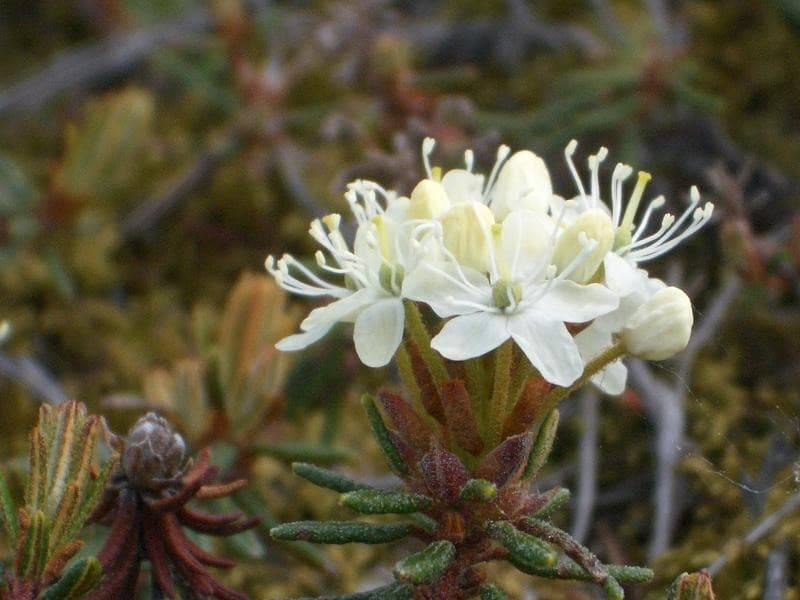
Ledum, flowers, Canada
Product code: Not provided
No sizes are currently available.
About this product
The Ledum plant (or Labrador Tea) was used for thousands of years by the North American Native as a "cure-all" and also as a tonic for the whole body. Ledum essential oil is known to be a strong liver and kidneys detoxifier and a very efficient immune system supporter. Very soothing and reassuring, it is helpful to ease insomnia and anxiety. For further information about this product or to inquire about larger quantities, please send us an email and we will get back to you as soon as possible. The availability and price of this product may vary without prior notice, if for some reason the quantity you have requested is currently unavailable, we will contact you shortly to discuss the best options to fulfill your needs.
Identity and quality
- Botanical name
- Ledum groenlandicum
- Origin
- Canada
- Plant part
- Flowers
- Cultivation
- SAUV.
- Synonyms
- Ledum latifolium, Labrador tea, Rhododendron groenlandicum
- Odour
- Herbal, wild
Composition and further information
It is an Ericaceae (like rhododendrons, heathers, wintergreens, arbutus or kalmias for example). This shrub grows abundantly in the boggy soils of northern Canada, and southern Greenland. Its strongly scented foliage has been spotted for centuries by locals to make herbal teas (decoction in hot water) and later to flavor beer. It is grown in Canada. If you venture to pick it yourself, it should not be confused with the swamp tea tree (Ledum palustris) which is toxic.
A word from Mikaël
Greenland Ledon, known to us as Labrador Tea, grows in cold regions, in thick clumps, in peat bogs, marshes and woods surrounded by conifers. It is a small shrub that rarely reaches a height above 50 centimeters. The leaves are green above, below they are orange and covered with dense down. The tiny white flowers grow in hemispherical clusters and are very fragrant and sticky. Labrador Tea tops the list of 17 plants designated by Native healers for their therapeutic virtues. The leaves are regularly used to make beverages and medicines — most often fragrant tea — by many Native American tribes like the Quinault and Makah tribes, the Potawatomi, the Anishinaabe, and the Iroquois.
Suggested use
Herbal teas, infusions, decoctions.
Precautions for use
Warning: because of its oxytocic effects, absolutely avoid Greenland tea (or Labrador tea) in case of pregnancy.
References
* L’aromathérapie énergétique - Lydia Bosson * L’aromathérapie exactement - Pierre Franchomme, Roger Jolis et Daniel Pénoël * L’aromathérapie, Se soigner par les huiles essentielles - Dr Valnet
Documents and certifications
No quality documents available for this product.
Warnings and storage
Read the product-specific precautions, safety data sheet and usage guidance before use.
- Keep out of reach of children. Do not ingest; seek urgent medical or poison-control advice after accidental ingestion.
- Avoid eyes and mucous membranes. For essential oils, follow dilution guidance and patch-test before use.
- Ask a health professional before using essential oils during pregnancy or breastfeeding, or with epilepsy or asthma.
- Stop use if an adverse reaction occurs. Follow the product-specific restrictions on sun exposure.
- Store in a closed container away from light and heat. This information does not replace medical advice.
Comments
No comments have been published yet.
Write a comment
Our team reviews comments before publication. Your public name and text will be visible. Sign in