
Collection
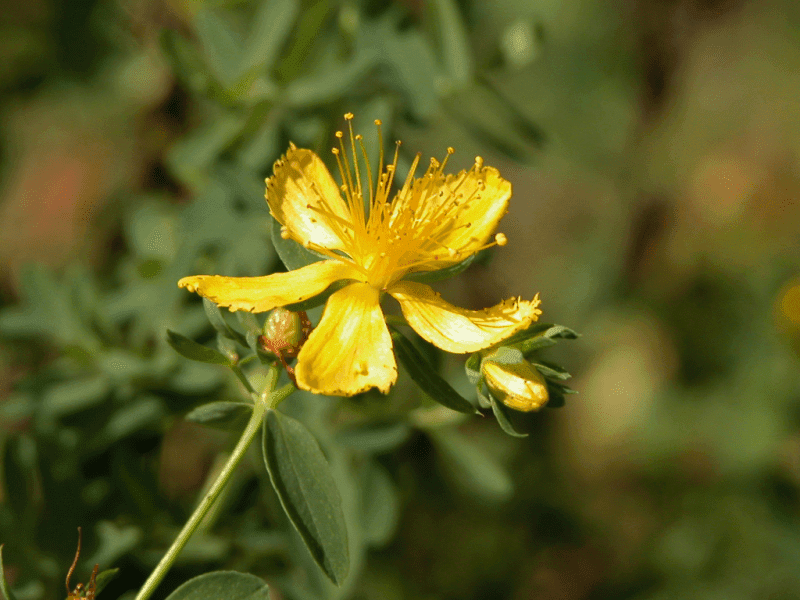
St-John's wort, Greece


Product code: Not provided
No sizes are currently available.
About this product
This macerate was prepared by infusing St-John's Wort flowers in a first cold pressed sunflower oil for several weeks. Its powerful anti-inflammatory and analgesic properties are very useful to treat muscular, joint and rheumatic pain. It also soothes and heals any type of skin irritation. CONCENTRATION : 500 g herb per 1000 ml of oil For further information about this product or to inquire about larger quantities, please send us an email and we will get back to you as soon as possible. The availability of this product may vary, if for some reason the quantity you have requested is currently unavailable, we will contact you shortly to discuss the best options to fulfill your needs.
Identity and quality
- Botanical name
- Hypericum perforatum
- Origin
- Greece
- Plant part
- Flowers
- Extraction
- maceration of the wildcraft or organic plants in organic olive oil.
- Cultivation
- S-BIO
- Synonyms
- Macération de millepertuis dans de l'huile végétale, St. John ́s wort extract,
- INCI
- HYPERICUM PERFORATUM FLOWER EXTRACT
- CAS EINECS
- 282-026-4
- Appearance
- Light orange to red-coloured
- Odour
- Characteristic
Composition and further information
This oily macerate is prepared by macerating St.John's wort flowers for several weeks in the sun, in a virgin sunflower oil of first cold pressure.
A word from Mikaël
The common Saint John's-Wort also known by the names of herb St. John, grass with a thousand holes or hunting-devil, is a recognized plant for its many properties including its effects antidepressants. This plant also has several other therapeutic properties recognized for a long time. Its Latin name, Hypericum perforatum (L.) comes from two Greek words: "Hyper" which means above or beyond, and "Eikon" meaning icon or appearance, "perforatum" in Latin means perforated. Indeed, the leaves are provided with thousands of small holes visible to the naked eye. This perennial plant found everywhere, grows very well in fields and bright clearings. From June 24, St John's grass being one of its common names, we can admire these colonies of pretty little yellow flowers that adorn the roadsides. St. John's Wort oil is obtained by macerating the tiny yellow flowers picked sparingly one at a time in certified organic virgin olive oil and filtered 1 month later. You can then see that the oil turns red. This is due to hypericin, one of the compounds in the plant that brings us so many benefits. The hypericin level is at its maximum just before flowering. The maceration thus obtained is indicated to promote wound healing, heal burns and sunburn, and even relieve shingles. It is an excellent carrier oil that can be used to dilute essential oils. Its anti-inflammatory action helps treat minor wounds or sprains and relieve muscle pain. ⇒ The oil with St. John's wort flowers retains its therapeutic qualities for about two years, stored in a tinted bottle protected from light in a cool place.
A word from Anny Schneider
This oil is the result of the cold maceration in the sun of the buds of the flowers of our St.John’s Wort gathered around St.John and in the middle of summer then macerated during the full season and filtered. This so-called St.John oil calms burns, infections and even suppurations of viral origin such as herpes. It can also be used as a base for analgesic oils.
Properties — source text
Its powerful anti-inflammatory and analgesic properties make it a first-rate ally for treating muscle, joint and rheumatic pains. It soothes and heals all types of skin irritation.
Precautions for use
The oil with St. John's wort flowers retains its therapeutic qualities for about two years, stored in a tinted bottle protected from light in a cool place.
Documents and certifications
Warnings and storage
Read the product-specific precautions, safety data sheet and usage guidance before use.
- Keep out of reach of children. Do not ingest; seek urgent medical or poison-control advice after accidental ingestion.
- Avoid eyes and mucous membranes. For essential oils, follow dilution guidance and patch-test before use.
- Ask a health professional before using essential oils during pregnancy or breastfeeding, or with epilepsy or asthma.
- Stop use if an adverse reaction occurs. Follow the product-specific restrictions on sun exposure.
- Store in a closed container away from light and heat. This information does not replace medical advice.
Comments
No comments have been published yet.
Write a comment
Our team reviews comments before publication. Your public name and text will be visible. Sign in