Almond, Sweet,
From $4.00
Carrier oils · Prunus dulcis · Italy · CONV.

Carrier oils

 New
Product code: HVB442722
Available to order
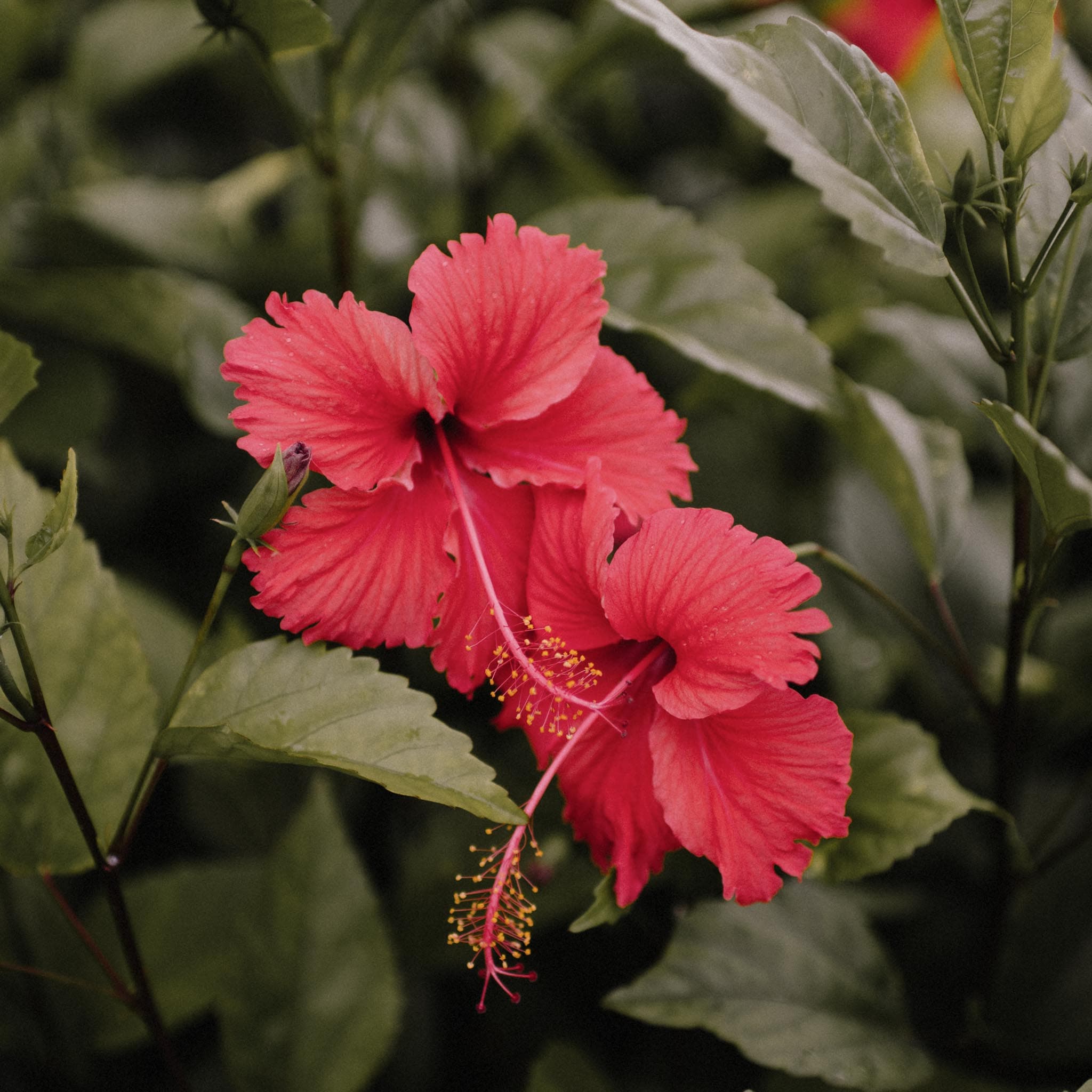
The hibiscus originated in Africa, probably in the region now called Angola. It is grown outdoors in almost all tropical and subtropical regions for the beauty of its flowers. It is also appreciated in cold regions, indoors, as a decorative plant where it can also flower. Hibiscus is also called Karkadé, Pink tea, Empire tea, Guinea sorrel, Guinea red sorrel or bissap. It is a plant from the large Malvaceae family such as Baobab, Mallow, Hollyhock, Lavatera, Okra, Marshmallow, Cotton, Cocoa or Durian. Many plants of this family are of very great economic importance. From a medicinal point of view, Hibiscus is, for example, used by the Maya K'iche of Guatemala to treat measles, or as an antibacterial in traditional African medicine. In the West, a decoction of the leaves is used to rinse the hair and in herbal tea, it would have slimming, draining and digestive properties. It is also used in cases of recurrent cystitis (in herbal tea, decoction, mother tincture...) We offer here first cold-pressed Hibiscus vegetable oil from the seeds of the plant (and not an essential oil or dry hibiscus leaves or flowers). This vegetable oil will be used with happiness for its regenerating properties and as an anti-aging active ingredient on the skin. It is renowned for relieving chapping on dry skin, exposed to tobacco, pollution, dehydrated or mature. It would help prevent stretch marks. This oil is softening, regenerating, nourishing, healing, it helps restore the natural hydrolipidic film thanks to its richness in essential fatty acids and phytosterols. It is exceptionally rich in vitamin F. Main components of the oil: Polyunsaturated essential fatty acids (PUFA or AGE) or vitamin F: linoleic acid (omega-6) (49.02%) Monounsaturated fatty acids (MUFA): oleic acid (omega-9) (26.44%) Saturated fatty acids (SFA): stearic acid (3.57%), palmitic acid (19.29%)
We offer here first cold-pressed Hibiscus vegetable oil from the seeds of the plant (and not an essential oil or dry hibiscus leaves or flowers). This vegetable oil will be used with happiness for its regenerating properties and as an anti-aging active ingredient on the skin. It is renowned for relieving chapping on dry skin, exposed to tobacco, pollution, dehydrated or mature. It would help prevent stretch marks. This oil is softening, regenerating, nourishing, healing, it helps restore the natural hydrolipidic film thanks to its richness in essential fatty acids and phytosterols. It is exceptionally rich in vitamin F.
Skin and hair care.
Cosmetic preparations: Anti-aging creams, moisturizing the upper layers of the epidermis, regenerating, for the face or the body Face and body care serums and oils massage oils After-sun care Nourishing and anti-stretch mark body milks Repairing and softening hand creams Evening care Hair masks
Not in diffusion.
* L’aromathérapie énergétique - Lydia Bosson * L’aromathérapie exactement - Pierre Franchomme, Roger Jolis et Daniel Pénoël * L’aromathérapie, Se soigner par les huiles essentielles - Dr Valnet
Read the product-specific precautions, safety data sheet and usage guidance before use.
No comments have been published yet.
Our team reviews comments before publication. Your public name and text will be visible. Sign in
Carrier oils