
Collection
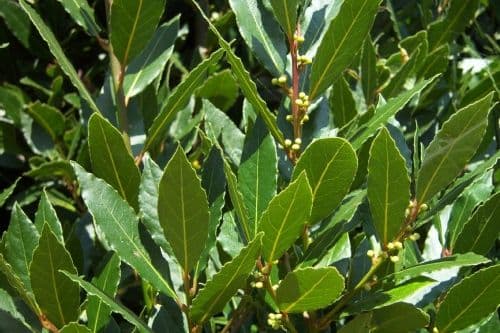
Laurel noble, Morocco

 New
Product code: Not provided
No sizes are currently available.
About this product
For further information about this product or to inquire about larger quantities, please send us an email and we will get back to you as soon as possible. The availability and price of this product may vary without prior notice, if for some reason the quantity you have requested is currently unavailable, we will contact you shortly to discuss the best options to fulfill your needs.
Identity and quality
- Botanical name
- Laurus nobilis
- Origin
- Morocco
- Plant part
- Leaves
- Extraction
- Steam distilled
- Cultivation
- S-BIO
- Synonyms
- Laurus nobilis angustifolia, Laurus undulate
- INCI
- Laurus nobilis leaf oil
- CAS TSCA
- 8006-78-8
- CAS EINECS
- 8007-48-5
- Appearance
- Pale yellow green liquid
- Odour
- Characteristic spicy, camphor-like odor
Composition and further information
Main components of essential oil Terpene oxides: 1.8 cineole (30-70%), beta-caryophyllene oxide Monoterpene alcohols: linalool, alpha-terpineol, terpinene-1-ol-4 Esters: terpenyl acetate, linalyl acetate Sesquiterpene lactone: costunolide Monoterpenes: alpha-pinene, beta-pinene, paracymene, sabinene Sesquiterpenes (alpha-copaene, allo-aromadendrene) Eugenol, methyl eugenol, beta-eudesmol, 1 (12), 8 (15)-caryophylladiene-9alpha-ol in small amount
A word from Mikaël
Self-confidence overcomes obstacles and achieves goals. It is the work of the laurel that dispels the doubts and fears associated with intellectual abilities. Reinforces self-esteem, it is the laurel of the "laurel crowns" and that of the baccalaureate. (text from the September 2021 newsletter, written by Michèle Larocque) Laurus nobilis, known to us as Bay Laurel, an ancient tree once common in the forests of the Mediterranean, appears in the tales of Apollo and the oracular priestesses of Delphi in Greek and Roman mythology. Later, Laurel will be associated with poetry and education; “baccalaureate” in Latin means “bay berries”. It was during the conquests of Alexander the Great that the crown of Laurel leaves became a symbol of excellence and victory, in both intellectual and geopolitical contests. In our times the leaves are most often known for their use in the kitchen where they are an ingredient in the composition of “bouquet garni” or simply added to the sauce of a dish during cooking. The leaves can also be infused as a herbal tea to which a little honey is added. In the deserts of Arabia, the Bedouins use it to perfume coffee. The essential oil carries a great wealth of virtues for the body, both on the physical and emotional level where it helps release, relieve and protect.
A word from Anny Schneider
Anti-inflammatory, anti-infectious, fungicidal and purifying, the organic essential oil of laurel can help to reduce boils, acne, mycoses and oral abscesses. Analgesic, it soothes joint pain. It is also antiviral and expectorant. Mixed in alcohol or an oil suitable for rubbing the scalp, it stimulates hair growth, strengthens and makes them shinier. This essential oil is appreciated to release the chakra from the throat, clarify its speech, increase self-esteem and attract success. It also gives courage, strengthens memory and the ability to concentrate. ⇒: Because of its high cineol content, avoid it in pregnant and lactating women as well as children under seven years.
Precautions for use
HE not recommended during pregnancy, and in children under 12 (presence of methyl eugenol), in case of history of convulsion, caution in case of antiepileptic treatment. No prolonged use.
References
* L’aromathérapie énergétique - Lydia Bosson * L’aromathérapie exactement - Pierre Franchomme, Roger Jolis et Daniel Pénoël * L’aromathérapie, Se soigner par les huiles essentielles - Dr Valnet * Wikiphyto.org
Documents and certifications
Warnings and storage
Read the product-specific precautions, safety data sheet and usage guidance before use.
- Keep out of reach of children. Do not ingest; seek urgent medical or poison-control advice after accidental ingestion.
- Avoid eyes and mucous membranes. For essential oils, follow dilution guidance and patch-test before use.
- Ask a health professional before using essential oils during pregnancy or breastfeeding, or with epilepsy or asthma.
- Stop use if an adverse reaction occurs. Follow the product-specific restrictions on sun exposure.
- Store in a closed container away from light and heat. This information does not replace medical advice.
Comments
No comments have been published yet.
Write a comment
Our team reviews comments before publication. Your public name and text will be visible. Sign in