
Collection
Spruce, Norway, Canada


Product code: Not provided
No sizes are currently available.
About this product
For further information about this product or to inquire about larger quantities, please send us an email and we will get back to you as soon as possible. The availability and price of this product may vary without prior notice, if for some reason the quantity you have requested is currently unavailable, we will contact you shortly to discuss the best options to fulfill your needs.
Identity and quality
- Botanical name
- Picea abies
- Origin
- Canada
- Plant part
- Needles & Twigs
- Extraction
- Steam distilled
- Cultivation
- S-BIO
- Synonyms
- N/A
- INCI
- Picea abies leaf oil
- CAS TSCA
- 8008-80-8
- CAS EINECS
- N/A
- Appearance
- Colorless to pale yellow liquid
- Odour
- Characteristic fresh sweet woody odor
Composition and further information
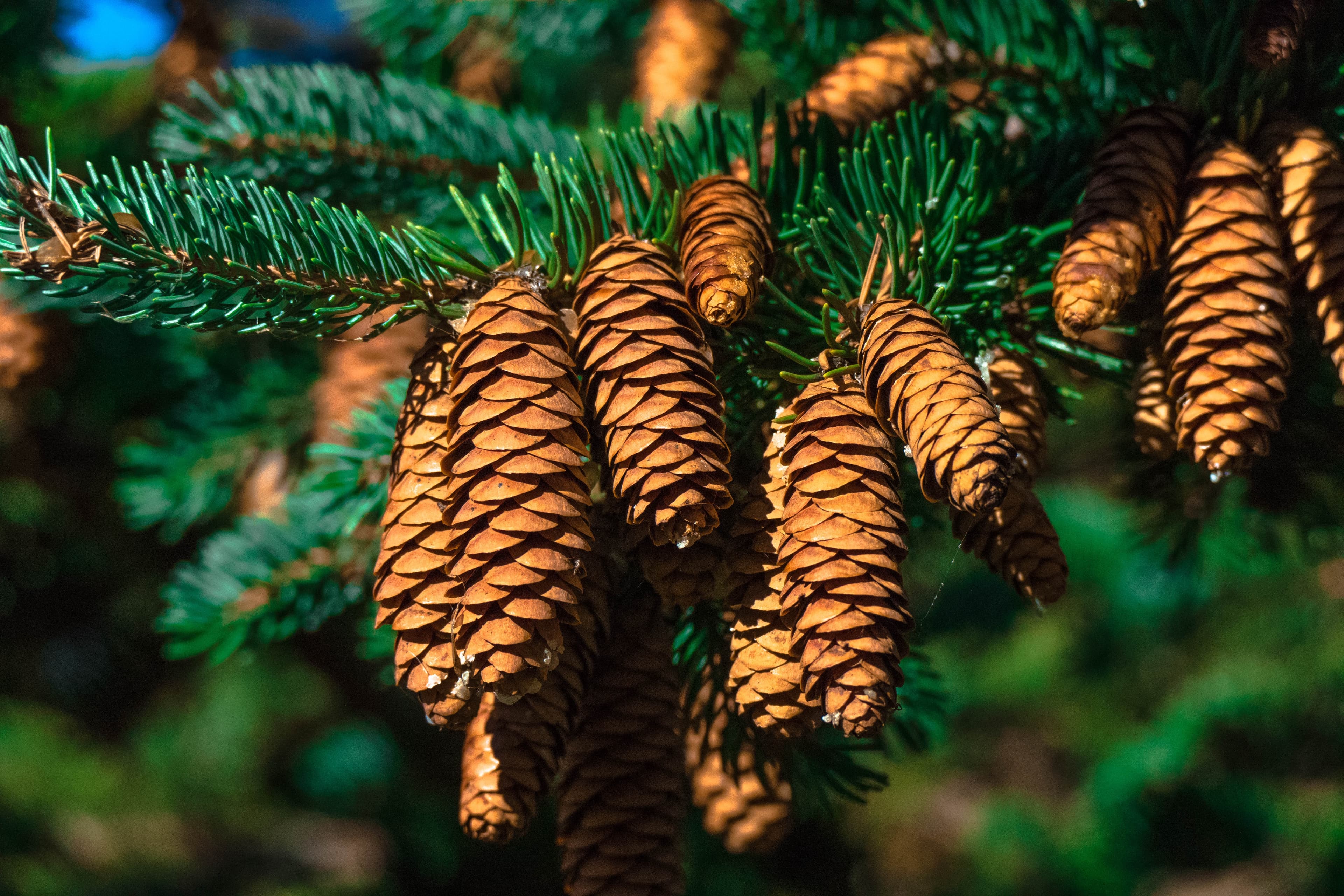
Adapted to cold and humid climates, it is naturally present in plains in the boreal forests of northern Europe, of which it is a major species, while it is generally present spontaneously in middle and southern Europe only in the mountains. above 400 m. It has also been planted extensively outside its range, including at low altitudes in middle Europe, as well as in southeastern Canada. It has drooping cones, which distinguishes it from silver fir. This tree is generally 35 to 40 meters high, but it can exceed 50 meters in a good station; some specimens measure 60 meters in Eastern Europe. Its trunk rarely exceeds 1.5 m in diameter. Norway spruce can live up to 500 years in its primary biotope (mountain forests). In 2008, however, a grove of Norway spruces two meters high was found in Sweden at an altitude of 950 meters, the age of which was estimated by the carbon-14 dating technique at around 5,000 years and the older, according to sources, from 7,8907 to 9,550 years old. Norway spruce has antiseptic, balsamic, expectorant, sedative, antiphlogistic and antibiotic properties. Burgundy pitch is obtained by incising the trunk (resin). The distillation of the pitch provides the oil of turpentine, which is used in the preparation of topical ointment. Considered by the Celts to be "the life-bearing tree", Norway spruce is traditionally used as a Christmas tree, although it loses its needles quickly and is a bit prickly, it is gradually giving way Nordmann fir (Abies nordmanniana).
A word from Mikaël
One of my favorite essences from Quebec.
A word from Anny Schneider
Anti-rheumatic, it is also analgesic and applied in local friction against joint pain, diluted in a vegetable oil. Stimulating the nervous system, massaging the spine, it activates the circulation aswell as the circulation of vital energy. In diffusion, it is also very effective in promoting oxygenation of the blood, cleaning up the lungs and the atmosphere.
References
* L’aromathérapie énergétique - Lydia Bosson * L’aromathérapie exactement - Pierre Franchomme, Roger Jolis et Daniel Pénoël * L’aromathérapie, Se soigner par les huiles essentielles - Dr Valnet
Documents and certifications
Warnings and storage
Read the product-specific precautions, safety data sheet and usage guidance before use.
- Keep out of reach of children. Do not ingest; seek urgent medical or poison-control advice after accidental ingestion.
- Avoid eyes and mucous membranes. For essential oils, follow dilution guidance and patch-test before use.
- Ask a health professional before using essential oils during pregnancy or breastfeeding, or with epilepsy or asthma.
- Stop use if an adverse reaction occurs. Follow the product-specific restrictions on sun exposure.
- Store in a closed container away from light and heat. This information does not replace medical advice.
Comments
No comments have been published yet.
Write a comment
Our team reviews comments before publication. Your public name and text will be visible. Sign in