
Collection
Chamomile, German, Nepal


Product code: Not provided
No sizes are currently available.
About this product
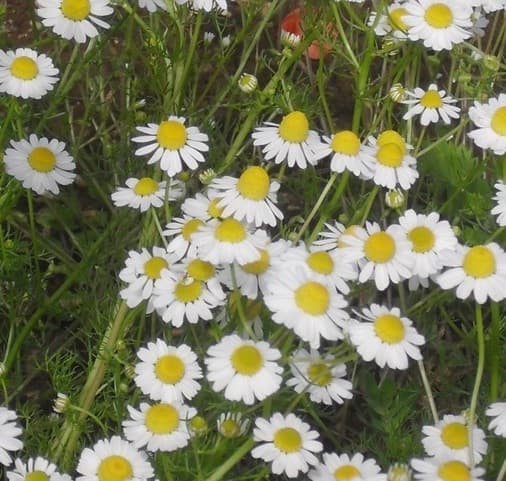
The Chamomile oil has wide range of therapeutic uses such as analgesic, anti allergic, anti inflammatory, anti spasmodic, bactericidal, carminative, cicatrizant, cholagogue, digestive, emmenagogue, febrifuge, fungicidal, hepatic, nervous sedative, stomachic, vermifuge, stimulant of leucocyte production, etc. Plant Description : Chamomile is native to Europe and Northwest Asia. It is mostly cultivated in the tropical regions of Nepal (below 1000m).It is an annual aromatic herb, reaching up to 60 to 90 cm. The stem is much branched, hairless and fistular. Leaves alternate, finely dissected. Flowers are small, aromatic, size ranged from 1.3 to 2.0 cm across; flower heads have white peripheral ray florets and yellow tubular disc florets. For further information about this product or to inquire about larger quantities, please send us an email and we will get back to you as soon as possible. The availability of this product may vary, if for some reason the quantity you have requested is currently unavailable, we will contact you shortly to discuss the best options to fulfill your needs.
Identity and quality
- Botanical name
- Matricaria recutita (Matricaria chamomilla)
- Origin
- Nepal
- Plant part
- Flowers
- Extraction
- Steam distilled
- Cultivation
- C-BIO
- Synonyms
- Chamomile, Scented Mayweed
- INCI
- matricaria chamomilla (chamomile) oil
- CAS TSCA
- 8002-66-2
- CAS EINECS
- N/A
- Appearance
- Dark greenish-blue viscous liquid
- Odour
- intensly sweet, herbaceous with fresh fruity undertone
Composition and further information
Chamomile is native to Europe and Northwest Asia. Called “German chamomile” because of the interest shown by the populations of the steppes of central Europe where it is abundant It is mainly cultivated in the tropical regions of Nepal (below 1000m). It is an annual aromatic herb, reaching up to 60-90 cm. The stem is much branched, glabrous and fistulous. Leaves alternate, finely dissected. The flowers are small, aromatic, the size ranged from 1.3 to 2.0 cm in diameter; the flower heads have white peripheral florets and yellow tubular florets. Main components of essential oil Sesquiterpenes: chamazulene (5%), beta-farnesene 20%, germacrene D, bicyclogermacrene Sesquiterpenols: alpha-bisabolol (8-15%) Sesquiterpene oxides: bisabololoxides A & B 35% (alpha-bisabolone oxide, alpha-bisabolol A oxide and alpha-bisabolol B oxide) Sesquiterpene lactones Coumarins Monoterpenes: limonene (traces) Polyacetylenic derivatives (chemotaxonomic characters of the Asteraceae family) Ethers: spiro-ether 5% (dicyclo-ether) Four main chemotypes can be differentiated: type A (predominance of bisabololoxide A), type B (bisabololoxide B), type C (alpha-bisabolol), type D (alpha-bisabolol and bisabololoxides A and B in equivalent amounts) Farnesene in some chemotypes
A word from Anny Schneider
This essential certified organic oil from the German chamomille is from Nepal. Sometimes it's called Hungarian Chamomille or wild Chamomille. Recognized for its analgesic, antispasmodic and soothing action, it relieves abdominal, muscular and nervous spasms. It is also very effective for treating skin conditions (acne, eczema, infected wounds, rosacea ...). Combined with a good vegetable oil like apricot, argan or sweet almond, it even reduces wrinkles.
Properties — source text
It relieves abdominal and muscle pain. It is also very effective in treating skin conditions (acne, eczema, infected wounds, rosacea, etc.).
References
* L’aromathérapie énergétique - Lydia Bosson * L’aromathérapie exactement - Pierre Franchomme, Roger Jolis et Daniel Pénoël * L’aromathérapie, Se soigner par les huiles essentielles - Dr Valnet *wikiphyto.org
Documents and certifications
Warnings and storage
Read the product-specific precautions, safety data sheet and usage guidance before use.
- Keep out of reach of children. Do not ingest; seek urgent medical or poison-control advice after accidental ingestion.
- Avoid eyes and mucous membranes. For essential oils, follow dilution guidance and patch-test before use.
- Ask a health professional before using essential oils during pregnancy or breastfeeding, or with epilepsy or asthma.
- Stop use if an adverse reaction occurs. Follow the product-specific restrictions on sun exposure.
- Store in a closed container away from light and heat. This information does not replace medical advice.
Comments
No comments have been published yet.
Write a comment
Our team reviews comments before publication. Your public name and text will be visible. Sign in