
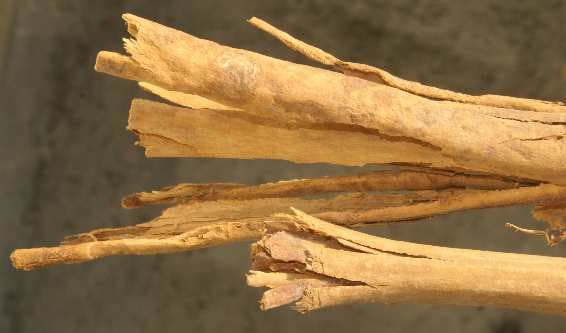
Collection
Ravensare, Madagascar
Product code: Not provided
No sizes are currently available.
About this product
For further information about this product or to inquire about larger quantities, please send us an email and we will get back to you as soon as possible. The availability and price of this product may vary without prior notice, if for some reason the quantity you have requested is currently unavailable, we will contact you shortly to discuss the best options to fulfill your needs.
Identity and quality
- Botanical name
- Ravensara anisata
- Origin
- Madagascar
- Plant part
- Bark
- Extraction
- Steam distilled
- Cultivation
- PED
- Synonyms
- Agathophyllum Ravensara, Havozo
- INCI
- Ravensara anisata (bark) oil
- CAS TSCA
- 91770-56-8
- CAS EINECS
- 91770-56-8
- Appearance
- Colorless to pale yellow liquid
- Odour
- Characteristic spicy liquorice-like odor
Composition and further information
Arbuste des forêts humides de Madagascar qui peut atteindre 5 mètres de hauteur, feuilles ovales de couleur verte, fleurs composées de 5 sépales très persistantes. Il porte plusieurs noms en Latin botanique : Ravensare aromatica, R. anisata, Agathophyllum aromaticum, Cryptocarya agathophylla. Les feuilles et les noix contenues dans les fruits ont la réputation d'être aphrodisiaques. Son nom vient de “ravina” feuille et “tsara” bonne. Les graines sont appelées “muscade de Madagascar” et utilisées en épices. Composants principaux de l'huile essentielle HE de Ravensara = Ravensara aromatica : Monoterpènes : limonène, sabinène 30-35 %, alpha-pinène, béta-pinène, alpha-terpinène, delta-3-carène, myrcène, gamma-terpinène, camphène, alpha-phellandrène, béta-phellandrène Monoterpénols : linalol, terpinène-4-ol, bornéol, alpha-terpinéol Phénols : méthyl-eugénol, méthyl-chavicol Sesquiterpènes : germacrène-D, béta-caryophyllène, béta-cubébène, alpha-humulène, delta-cadinène, alpha-copaène, delta-élémène, gamma-cadinène Esters : acétate de bornyle Oxydes : 1,8-cinéole Alcénylbenzène : élémicine L'HE d'écorce est vendue sous la dénomination Ravensara anisata (méthyl chavicol 83 à 98 %).
A word from Anny Schneider
The bark of this rare oceanic tree, also called havozo, contains typical topical bactericidal elements, such as methylchavicol and linalol. Diluted in 90% fine vegetable oil (Argan, apricot, hemp or jojoba) it will relieve skin ailments. It can also be applied near digestive regions in case of indigestion, cramps or spasms.
Suggested use
In dilution (1 for 10) on the abdomen.
Specifications
Havozo,
Documents and certifications
No quality documents available for this product.
Warnings and storage
Read the product-specific precautions, safety data sheet and usage guidance before use.
- Keep out of reach of children. Do not ingest; seek urgent medical or poison-control advice after accidental ingestion.
- Avoid eyes and mucous membranes. For essential oils, follow dilution guidance and patch-test before use.
- Ask a health professional before using essential oils during pregnancy or breastfeeding, or with epilepsy or asthma.
- Stop use if an adverse reaction occurs. Follow the product-specific restrictions on sun exposure.
- Store in a closed container away from light and heat. This information does not replace medical advice.
Comments
No comments have been published yet.
Write a comment
Our team reviews comments before publication. Your public name and text will be visible. Sign in