
Collection
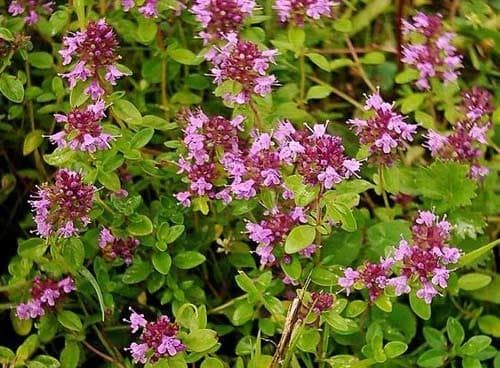
Thyme, red, India
Product code: Not provided
No sizes are currently available.
About this product
For further information about this product or to inquire about larger quantities, please send us an email and we will get back to you as soon as possible. The availability and price of this product may vary without prior notice, if for some reason the quantity you have requested is currently unavailable, we will contact you shortly to discuss the best options to fulfill your needs.
Identity and quality
- Botanical name
- Thymus zygis
- Origin
- India
- Plant part
- Aerial parts
- Extraction
- Steam distilled
- Cultivation
- CONV.
- Synonyms
- Thymus webbianus
- INCI
- Thymus vulgaris (thyme) oil
- CAS TSCA
- 8007-46-4
- CAS EINECS
- 84929-51-2
- Appearance
- Pale yellow to reddish yellow clear liquid
- Odour
- Characteristic thymol odor. Warm, Spicy, Pungent
A word from Anny Schneider
The essential oil of Thyme red has always been recognized for its great curative properties: antiseptic, expectorante, anti-infectious, antiviral, immune stimulant, antiparasitic, fungicide, liver stimulant, digestive, nerve balancing and tonic. This thyme is also digestive, effective against bloating, parasites and bacterial infections, both topical and pectoral. Being dermocaustic because of its richness in phenols and monoterpenes, it is important to ensure that its concentration does not exceed 5% when used in anointing, friction or massage diluted in vegetable oil, applied close to the organ or tissue to be treated. The use of red thyme essential oil is not recommended in pregnant or nursing women, as well as in children under 6 years. It is also not recommended for hyperthyroidism or high blood pressure.
Properties — source text
Thyme essential oil has always been recognized for its great healing properties: very powerful antiseptic, expectorant, anti-infectious, antiviral, immune stimulant, antiparasitic, fungicide, liver function stimulant, digestive, nerve balancing, tonic... The use of thyme essential oil is not recommended in pregnant or nursing women, as well as in children under 6 years. It is also not recommended for hyperthyroidism or high blood pressure. Being dermocaustic, it is important to ensure that its concentration does not exceed 1% when used in anointing, friction or massage in vegetable oil. The thyme family includes about 300 species. The red thyme chemotype is rich in thymol, which gives it a great power of action (especially for repeated infectious states, demonstrating an immune weakness) and implies in return a prudent and wise use.
Suggested use
Localized anointings
Precautions for use
The use of essential oil of thyme is not recommended for pregnant or breastfeeding women, as well as for children under 6 years old. It is also not recommended in case of hyperthyroidism or arterial hypertension. Being dermocaustic, it is important to ensure that its concentration does not exceed 5% when used in unction, friction or massage in vegetable oil.
References
* L’aromathérapie énergétique - Lydia Bosson * L’aromathérapie exactement - Pierre Franchomme, Roger Jolis et Daniel Pénoël * L’aromathérapie, Se soigner par les huiles essentielles - Dr Valnet
Documents and certifications
Warnings and storage
Read the product-specific precautions, safety data sheet and usage guidance before use.
- Keep out of reach of children. Do not ingest; seek urgent medical or poison-control advice after accidental ingestion.
- Avoid eyes and mucous membranes. For essential oils, follow dilution guidance and patch-test before use.
- Ask a health professional before using essential oils during pregnancy or breastfeeding, or with epilepsy or asthma.
- Stop use if an adverse reaction occurs. Follow the product-specific restrictions on sun exposure.
- Store in a closed container away from light and heat. This information does not replace medical advice.
Comments
No comments have been published yet.
Write a comment
Our team reviews comments before publication. Your public name and text will be visible. Sign in