
Collection
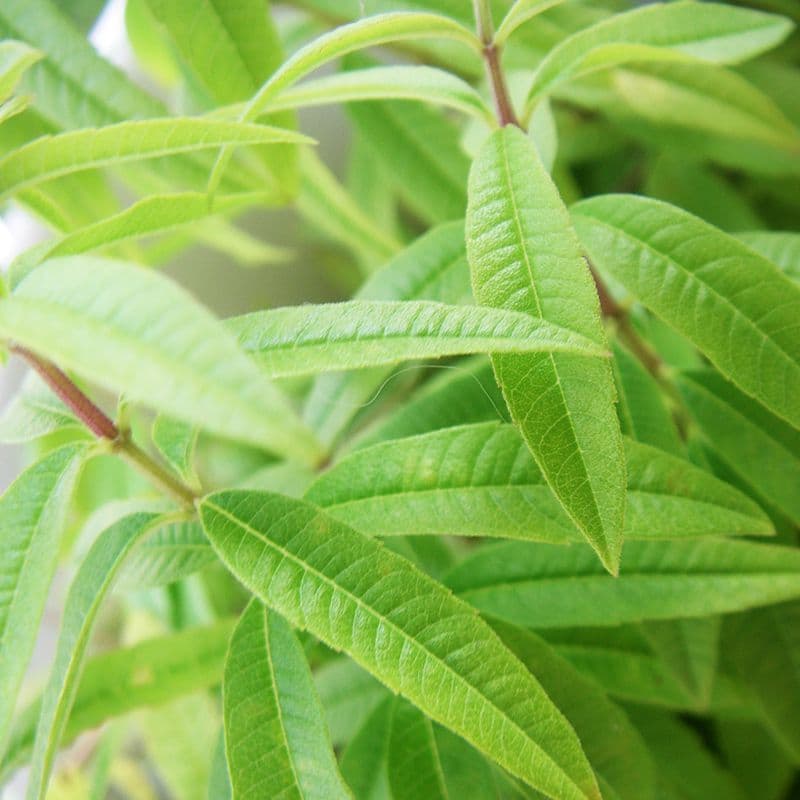
Lemon verbena, Morocco


Product code: Not provided
No sizes are currently available.
About this product
For further information about this product or to inquire about larger quantities, please send us an email and we will get back to you as soon as possible. The availability and price of this product may vary without prior notice, if for some reason the quantity you have requested is currently unavailable, we will contact you shortly to discuss the best options to fulfill your needs.
Identity and quality
- Botanical name
- Lippia citriodora
- Origin
- Morocco
- Plant part
- Flowers
- Extraction
- Steam distilled
- Cultivation
- C-BIO
- INCI
- N/A
- CAS TSCA
- N/A
- CAS EINECS
- N/A
- Appearance
- Incolore à jaune pâle à doré, liquide
- Odour
- Fraîche, citronnée, douce, fruitée
Composition and further information
The fragrant verbena (also called: lemon verbena or lemon verbena or citronella) is a shrub about 2m high with angular and branched stems. The leaves are generally inserted by 3 on the branches and are serrated. They give off a sweet lemon scent when crushed. It is a plant native to Chile which was discovered by Europeans during the conquest of South America. It is used in herbal teas for its sedative, anti-inflammatory, digestive, possibly anti-helicobacter pylori properties (according to some studies). It is contraindicated during pregnancy, presents a dermocaustic risk (photosensitization to the sun) and can sometimes present an allergic risk due to citrals and limonene. Main components of essential oil More than 120 constituents Monoterpene aldehydes: citrals (20-40%), geranial (citral a): 15-25% and neral (citral b): 10-20%, citronellal (15-20%), photocitral Monoterpenes: Limonene 10-20%, Sabinene Monoterpene alcohols: geraniol, nerol, alpha-terpineol, geraniol Sesquiterpenes: ar-curcumene, beta-caryophyllene, bicyclogermacrene (2.48%), beta-curcumene, germacrene-D Sesquiterpene alcohols: spathulenol, (E)-nerolidol Oxides: 1,8-cineole, caryophyllene oxide Ketones: verbenone
Properties — source text
Antidepressant and sedative powerful, it is a great help in case of anxiety, stress, anxiety, fatigue or nervous breakdown, insomnia (unction, a few drops diluted in a vegetable oil along the spine, on the solar plexus and on the inner side of the wrists). Its fine aroma, lemony and sweet is a real balm bringing serenity. Precious, it will be mostly used for its action on the energy and emotional levels. But it is also known to be an effective anti-inflammatory on the muscles, joints, tendons, as well as on the intestines and the digestive system as a whole (it would relieve people suffering from Crohn's disease). It is photosensitive (avoid exposure to the sun as a result of application) and may irritate some sensitive skin when not diluted in vegetable oil.
Suggested use
Cosmétique Diffusion
Precautions for use
Contraindicated during pregnancy. Possible dermocausticity. Allergic risk with citrals and limonene. Risk of photosensitization with EO, avoid exposure to the sun.
Documents and certifications
Warnings and storage
Read the product-specific precautions, safety data sheet and usage guidance before use.
- Keep out of reach of children. Do not ingest; seek urgent medical or poison-control advice after accidental ingestion.
- Avoid eyes and mucous membranes. For essential oils, follow dilution guidance and patch-test before use.
- Ask a health professional before using essential oils during pregnancy or breastfeeding, or with epilepsy or asthma.
- Stop use if an adverse reaction occurs. Follow the product-specific restrictions on sun exposure.
- Store in a closed container away from light and heat. This information does not replace medical advice.
Comments
No comments have been published yet.
Write a comment
Our team reviews comments before publication. Your public name and text will be visible. Sign in