Almond, Sweet,
From $4.00
Carrier oils · Prunus dulcis · Italy · CONV.

Carrier oils


Product code: HVB227841
Available to order
This first cold pressed virgin safflower oil from Mexico is particularly effective to treat couperose skin. Non comedogenic. Very sensitive to oxidation. For further information about this product or to inquire about larger quantities, please send us an email and we will get back to you as soon as possible. The availability of this product may vary, if for some reason the quantity you have requested is currently unavailable, we will contact you shortly to discuss the best options to fulfill your needs.
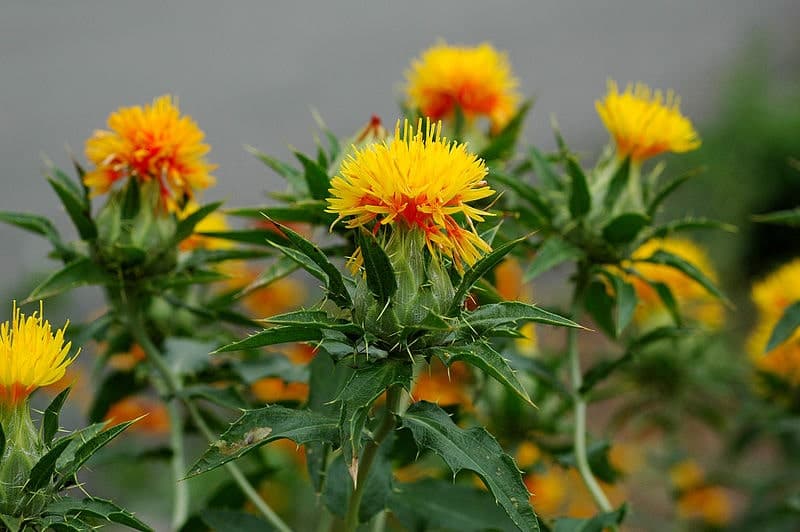
Called interchangeably Safflower, False Saffron, Dyers' Safflower, or Bastard Saffron, safflower is a plant native to India or the area between India and Turkey and cultivated in the southern Mediterranean since Antiquity. It is one of the oldest cultivated plants; we have found remains of safflower dating from the 12th dynasty in Egypt where it was already used as a dye. The plant has a deep taproot, it likes arid areas. It is a dye plant (which produces a dye) of the Asteraceae family that is no longer found in the wild. It has long provided a yellow-red dye which was used for fabrics and food. In China, safflower red (yanzhi 胭脂) is present in wall paintings from the 4th–6th centuries. This pigment was made from the flowers of safflower, madder and Kerria lacca. From the 16th century, cochineal red began to be imported into China and gradually replaced safflower red. The genus name Carthamus was borrowed from the medieval Latin carthamo in the 9th century, itself taken from the plant's Arabic name, qūrtūm. Since saffron is a rare and very expensive spice, safflower has long been used to adulterate it. Since the 1950s, oil has been produced from its seeds. Safflower is used in Ayurvedic medicine (Kusumbha) and in traditional Chinese medicine (TCM) under the name Honghua. These centuries-old medicines use safflower for its supposed hypolipidemic and hypocholesterolemic properties. In India, oil is used in cooking, for lighting and in soap making. The seeds are eaten roasted in Ethiopia. Safflower oil is a edible oil that is best used cold for salads, for skin care, or in oil paint. It is rich in monounsaturated fatty acids, represented in the form of oleic acid. Main components of the oil: Oil rich in polyunsaturated fatty acids Omega 3 alpha linolenic acid: 0.1% Omega 6 linoleic acid: 8.7% Oleic acid: 70-79%
Combined with good essential oils, it can treat redness on the face as well as cellulite. The ripe seeds of this pretty Asteraceae with soft yellow petals is known for its lipotropic effects, drains and dissolves fats , both circulating and on the surface. It is a great ally for rosacea and very sensitive skin. It is non-comedogenic and also helps to treat acne and excessively oily skin.
Safflower, a member of the Asteraceae family is believed to be one of the longest cultivated plants, the first evidence of which is traced to 2500 BC in Mesopotamia. The brightly coloured petals have been in use in textile dying since at very least the XII dynasty in Egypt where the plant was held in such high esteem that garlands of Safflower blooms were found in the tomb of Tutankhamon. Most of us know Safflower more humbly, for the oil pressed from its seed. An oil that provides an abundance of nutritive elements beneficial to our bodies inside and out.
Read the product-specific precautions, safety data sheet and usage guidance before use.
No comments have been published yet.
Our team reviews comments before publication. Your public name and text will be visible. Sign in
Carrier oils