
Collection
Sacha inchi, Peru


Product code: Not provided
No sizes are currently available.
About this product
Identity and quality
- Botanical name
- Plukenetia volubilis
- Origin
- Peru
- Plant part
- Seeds
- Extraction
- Cold pressed
- Cultivation
- C-BIO
- Synonyms
- Aceite de semilla de sacha inchi, Olio di semi Sacha Inchi, Sacha Inchi Samenöl, Sacha inchi seed oil, Óleo de semente de sacha inchi
- INCI
- PLUKENETIA VOLUBILIS SEED OIL
- CAS TSCA
- 68956-68-3
- CAS EINECS
- 273-313-5
- Appearance
- limpide, allant du jaune soutenu à l'ambre doré
- Odour
- légèrement de haricot et caractéristique de la variété
Composition and further information
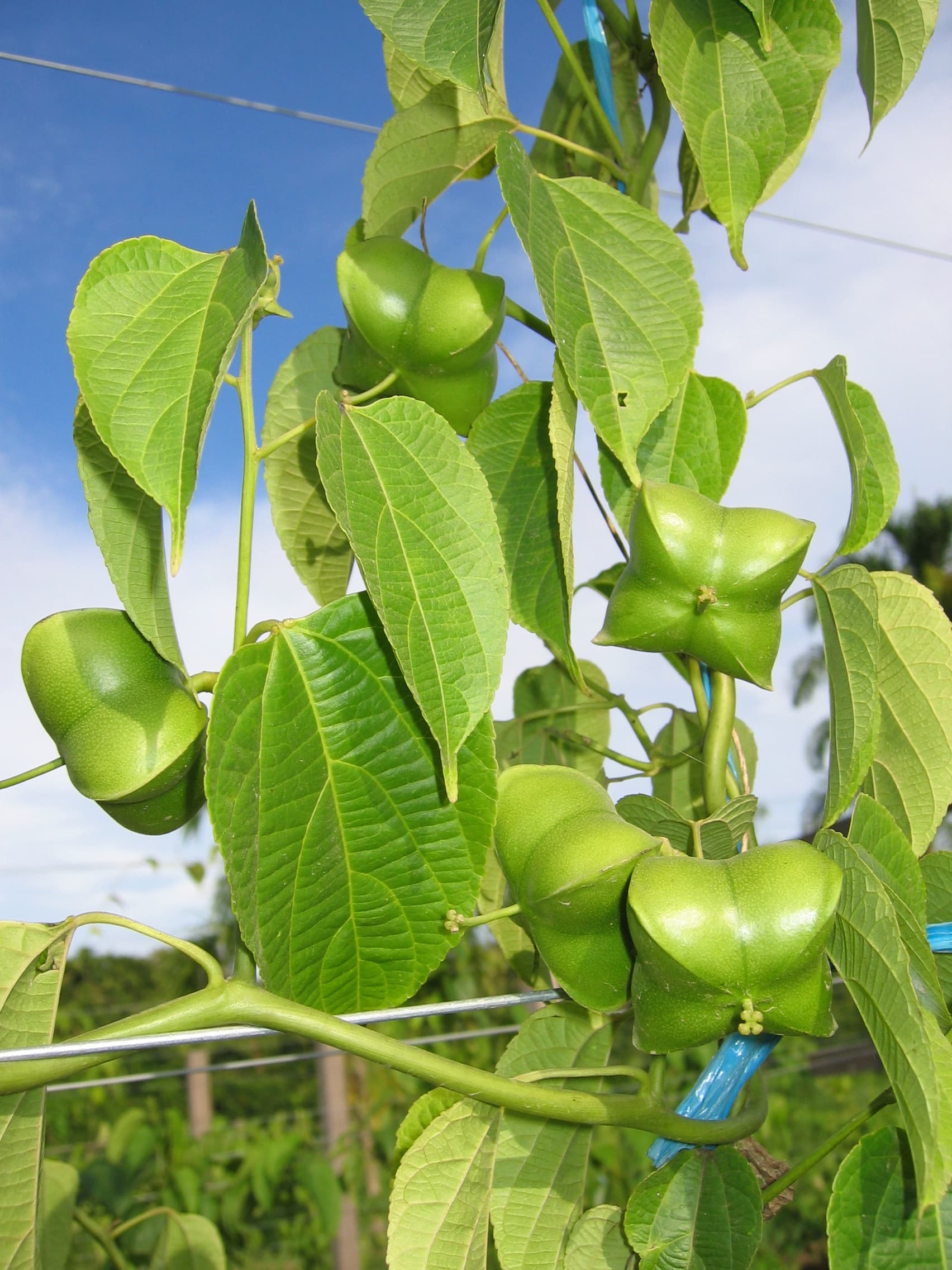
Sacha inchi or Inca inchi is also called sacha peanut, mountain peanut, Inca nut or Inca peanut. It is a plant of the large Euphorbiaceae family which also includes euphorbia of course but also castor bean, sago palm, croton or rubber tree for example. Plukenetia volubilis should not be confused with Caryodendron orinocense, another species in the family Euphorbiaceae which shares the common name inchi. It is a climbing plant native to the Amazon rainforest of Peru, Ecuador, Colombia etc. but it adapts to hot or average climates up to 1700 m altitude. It can reach about 12 m in length. The fruits are capsules 3-5 cm in diameter with 4-7 spikes, are green and ripen blackish-brown. When ripe, the fruits contain a black, moist pulp that is messy and inedible. They are therefore normally left to dry on the plant before harvesting. By two years of age, often up to a hundred dried fruits can be harvested at a time, yielding 400 to 500 seeds several times a year. Fruit capsules usually consist of four to five lobes, but some can have as many as seven. Inside are the seeds, oval, dark brown, 1.5-2 cm in diameter with a mass of 45-100 grams. Raw, the seeds are toxic but cooking degrades the alkaloids, saponins and lectins responsible for the toxicity and the oil obtained becomes edible and a source of polyunsaturated fatty acids. The seeds are also eaten in the form of chewable nuts and the leaves chewed or taken as a kind of tea. The oil extracted by cold pressing has a mild flavor and leaves a slight nutty taste in the mouth. After extracting the oil, a meal remains which is technically called cake and which is characterized by a high protein content that reaches 60%, being the food with the highest protein content known today. The oil is rich in the essential fatty acids omega-3 linolenic acid (≈45-53% of total fat content) and omega-6 linoleic acid (≈34-39% of fat content), as well as non-essential omega-9s (≈6-10% fat content). In Peru in 2009, the humanitarian group Oxfam supported techniques for growing sacha inchi as a cash crop by indigenous groups like the Ashaninka. Composition in fat acids : Palmitic C16:0 3.65 C stearic 18:0 2.54 Oméga oleic 9 C 18:1 ω9 8.40 Oméga 6 linoleic C 18:2 ω6 36.80 Alpha linolenic omega 3 C 18:3 ω3 48.61 Saturated total 6.19 Total insaturated 93.81 antioxidants Vitamin A 681ug Vitamin E 17mg/100g
Properties — source text
In external use, Sacha inchi vegetable oil has properties that improve the general appearance of the skin. It is emollient, moisturizing, nourishing, protective, antioxidant. It softens and softens the skin. It is a greasy oil of dry texture, it penetrates quickly into the skin. Taken internally, it would increase HDL-cholesterol and the blood concentration of alpha-linolenic acid and DHA and reduce triglycerides according to a study (Gonzales GF, Gonzales C, Villegas L. Exposure of fatty acids after a single oral administration of sacha inchi (Plukenetia volubilis L.) and sunflower oil in human adult subjects. Toxicol Mech Methods. 2014 Jan;24(1):60-9. doi: 10.3109/15376516.2013.850566).
Suggested use
Massages. Anointings. Addition in the kitchen.
Precautions for use
In the kitchen, it is best used cold, mixed or not with other vegetable oils, as a seasoning. Users can expect a shelf life of 2 years with proper storage conditions (cool, out of direct sunlight). Refrigeration after opening is recommended.
References
Wikiphyto.org
Documents and certifications
Warnings and storage
Read the product-specific precautions, safety data sheet and usage guidance before use.
- Keep out of reach of children. Do not ingest; seek urgent medical or poison-control advice after accidental ingestion.
- Avoid eyes and mucous membranes. For essential oils, follow dilution guidance and patch-test before use.
- Ask a health professional before using essential oils during pregnancy or breastfeeding, or with epilepsy or asthma.
- Stop use if an adverse reaction occurs. Follow the product-specific restrictions on sun exposure.
- Store in a closed container away from light and heat. This information does not replace medical advice.
Comments
No comments have been published yet.
Write a comment
Our team reviews comments before publication. Your public name and text will be visible. Sign in